Quickfire Interviews
A fast-paced interview format bringing LSE German Symposium speakers beyond the stage and onto social media.
LSE German SocietyMarch 2025
Context and challenge
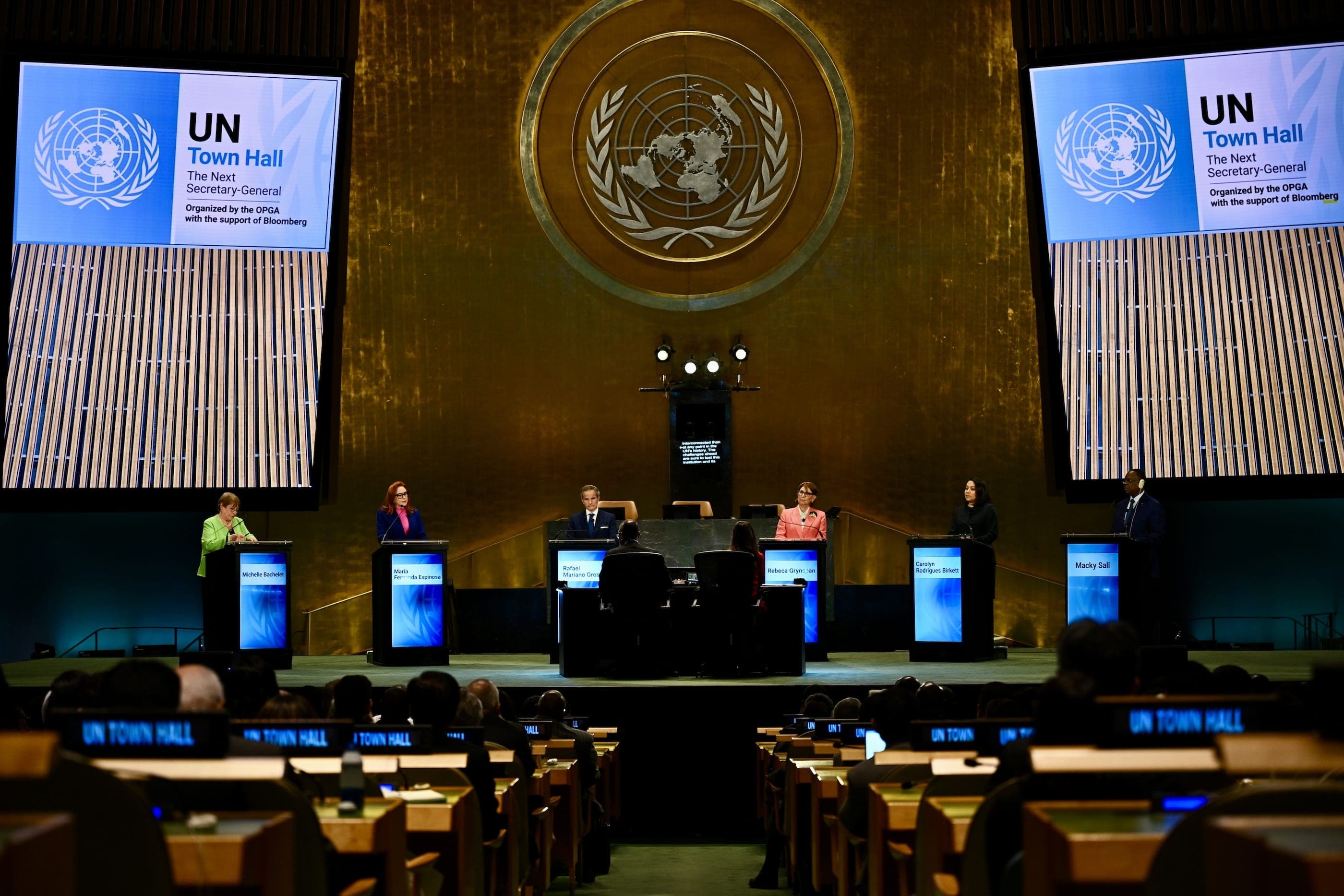
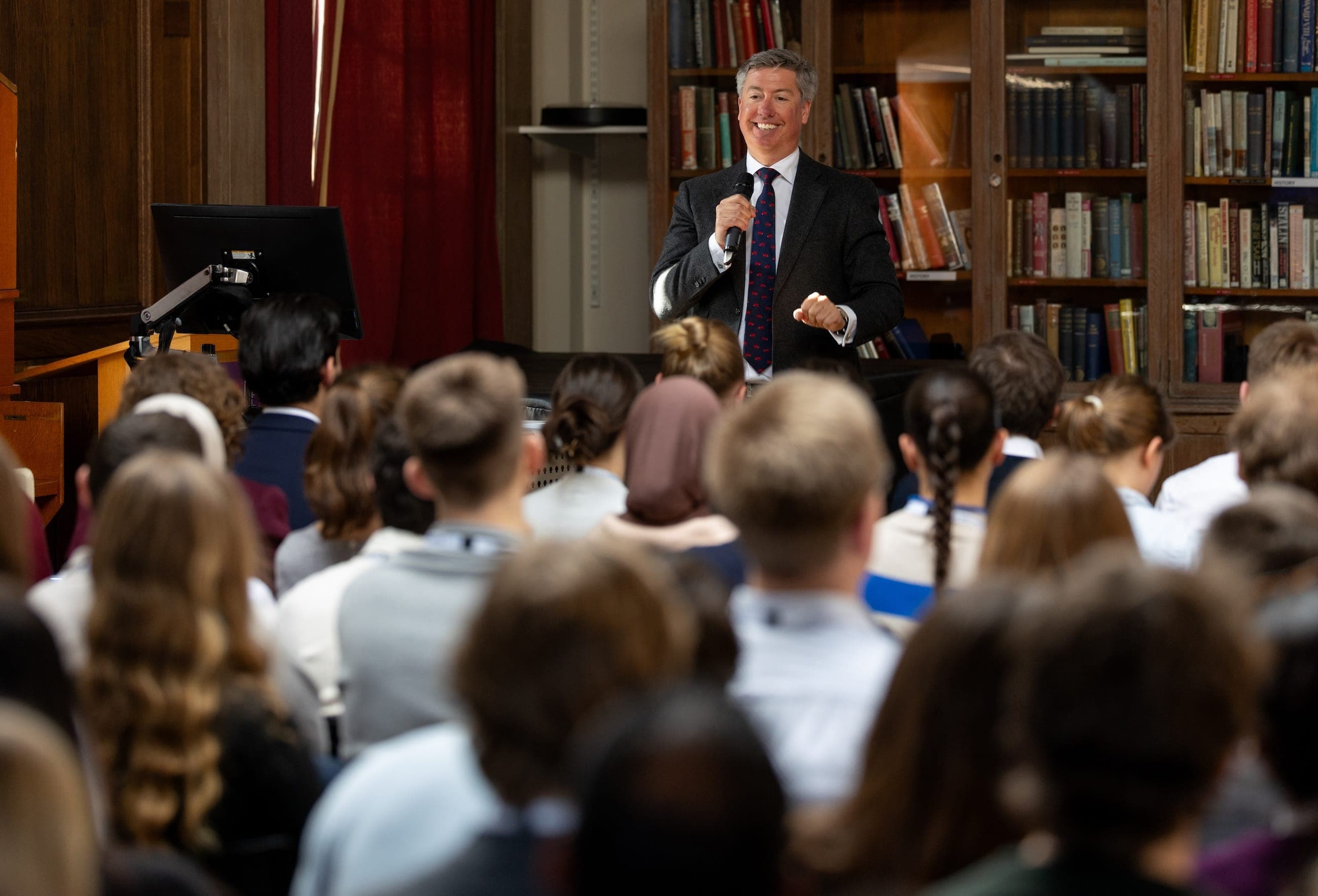
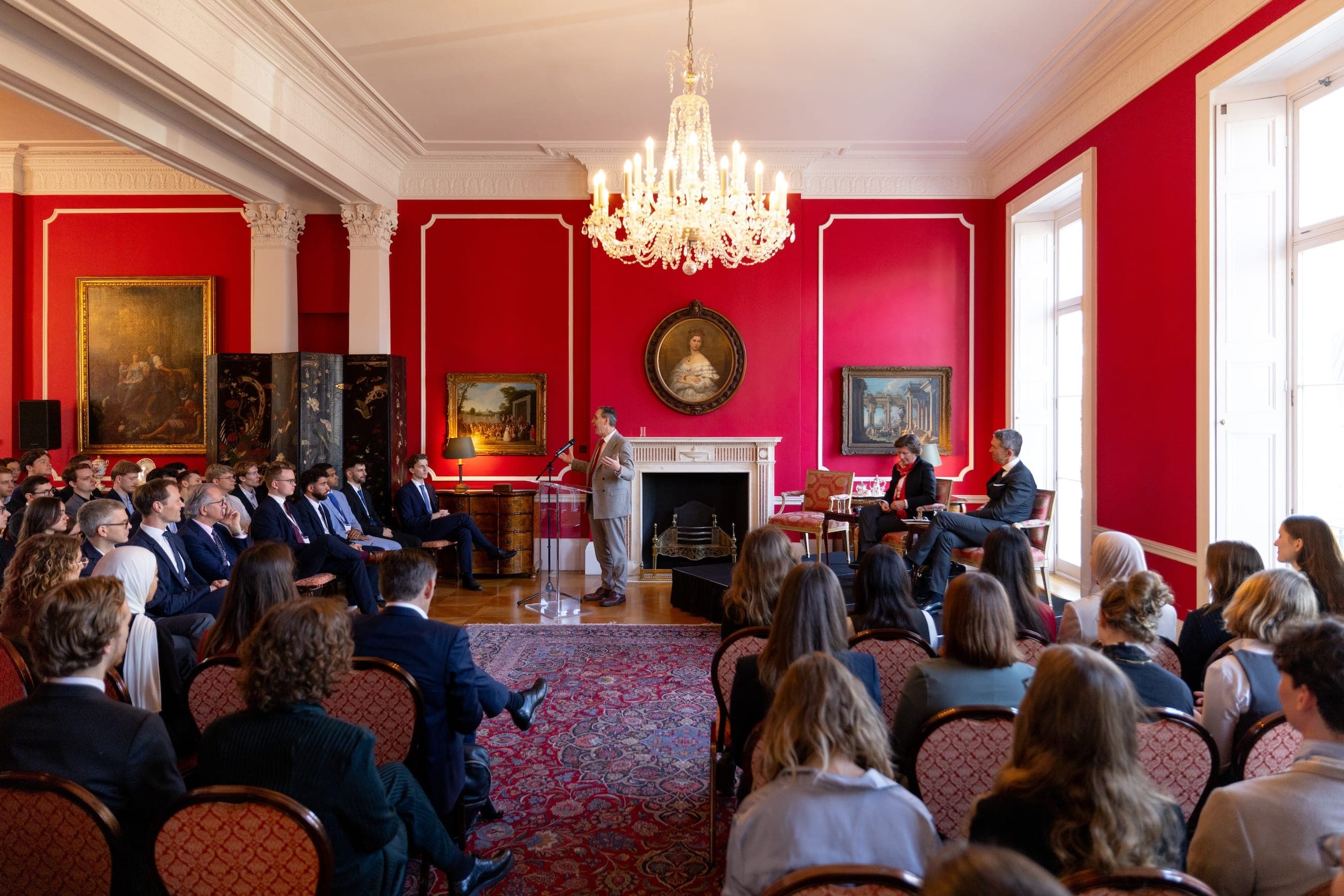
The LSE German Symposium brings politicians, diplomats, academics and business leaders to campus for several days of talks, panels and smaller discussions. In 2025, the programme took place under the theme "Transforming Tomorrow".
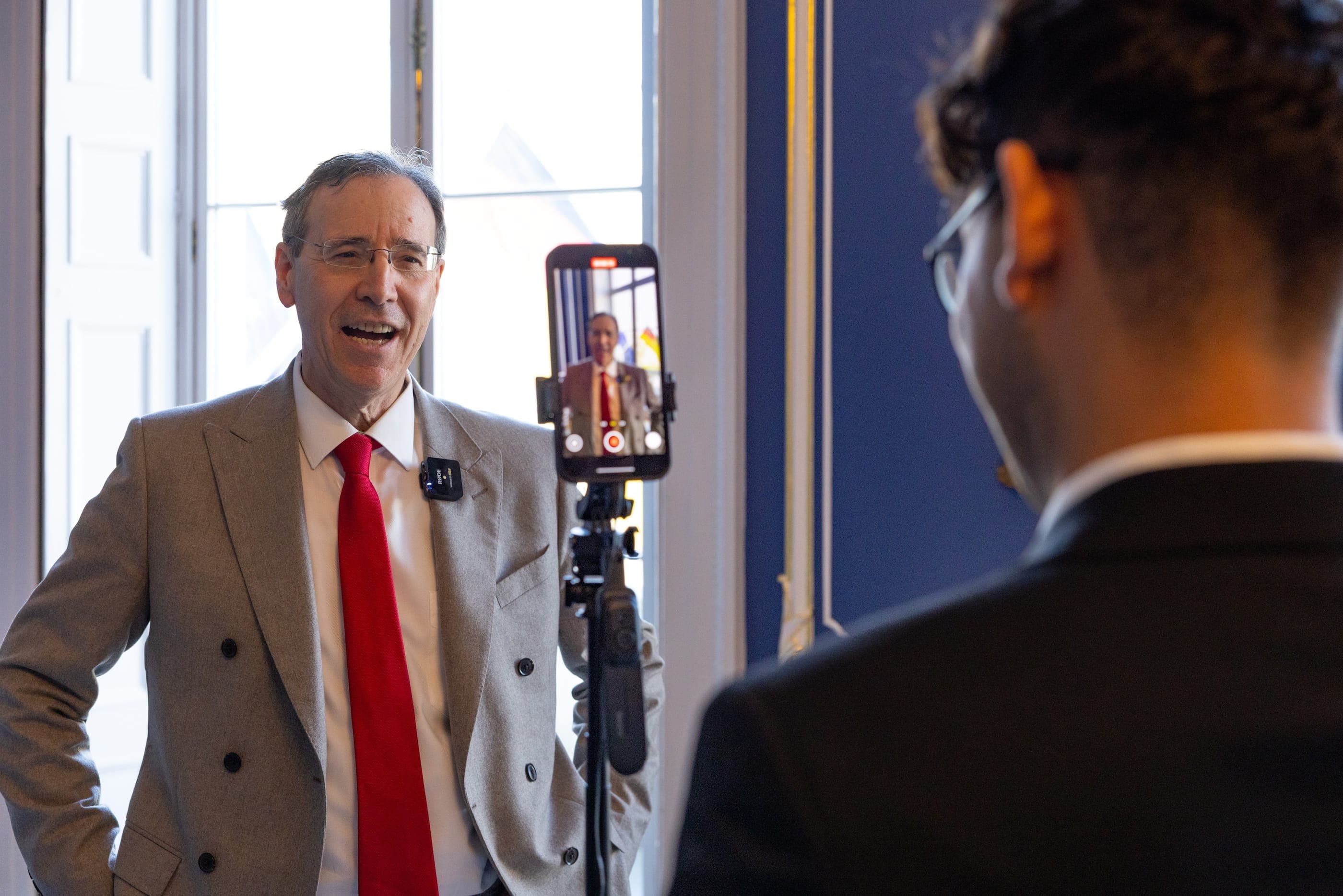
Most of the event's content worked well in the room, but conventional speaker interviews were often too formal and slow for social media. The brief was to create a format that could be recorded quickly, hold attention online and show a more personal side of guests without losing the substance of their work.
The quickfire interviews used a mix of policy, professional and more personal questions. Around 30 interviews were produced by the wider communications team during the Symposium.
My role
I produced five interviews, working in pairs with other members of the communications team.
For each interview, I researched and selected the questions, coordinated the recording, directed the speaker, filmed the interview, edited the final cut and wrote the caption. The broader format and visual identity were developed collaboratively by the team.
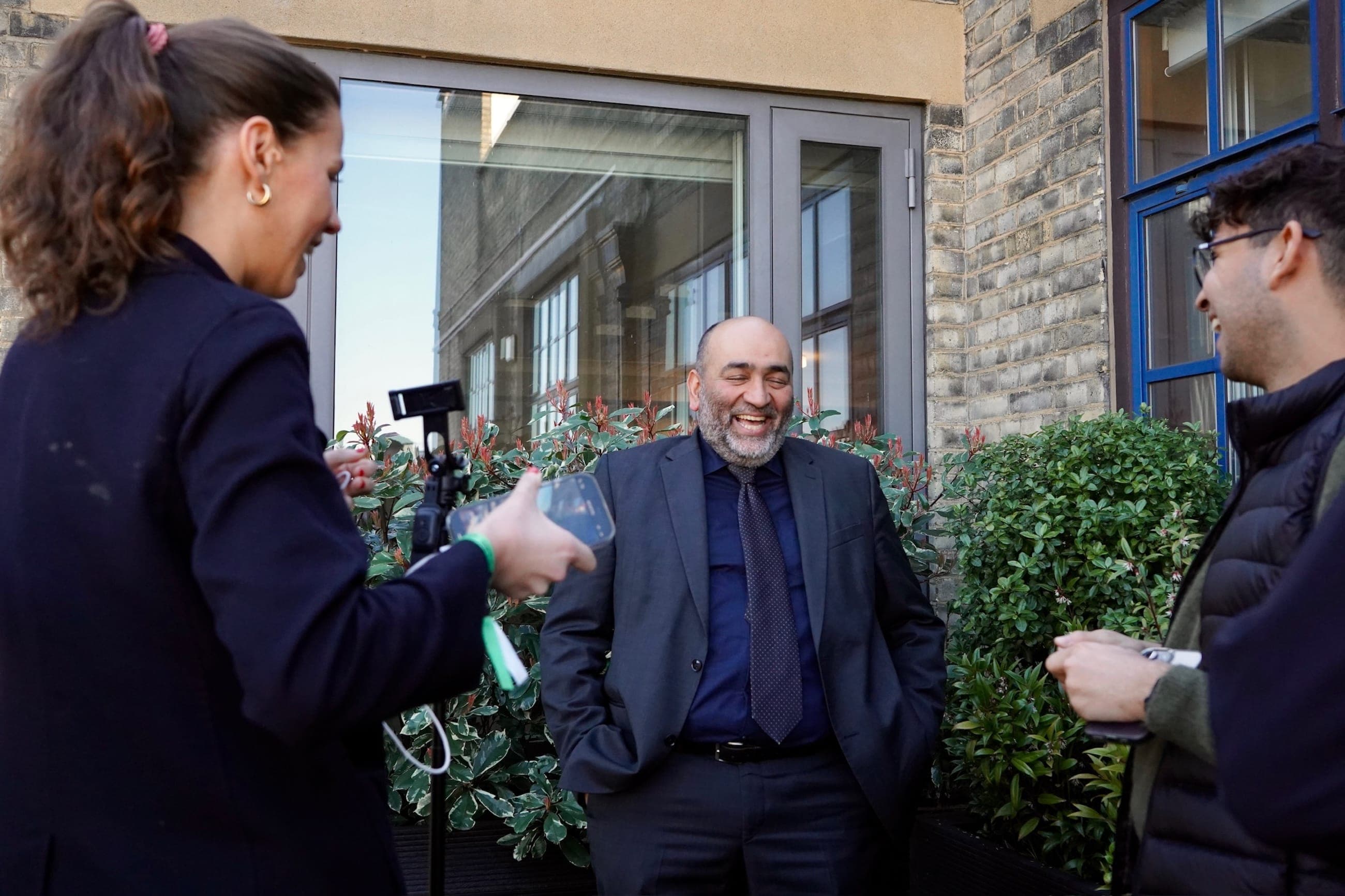
Most recordings happened immediately after a panel, often in noisy event spaces and with only a few minutes of access to the speaker. The setup had to be quick, the roles within the team had to be clear and the questions needed to work without a lengthy briefing.
Key decisions
Mix policy with personality
The interviews moved between substantive questions and more personal prompts. The British Ambassador to Germany could discuss British-German relations and German humour. Omid Nouripour could speak about campaign strategy and name a favourite song by Frankfurt rapper Haftbefehl. The lighter questions were still researched and specific, which kept the format personal without making it trivial.
Design for limited access
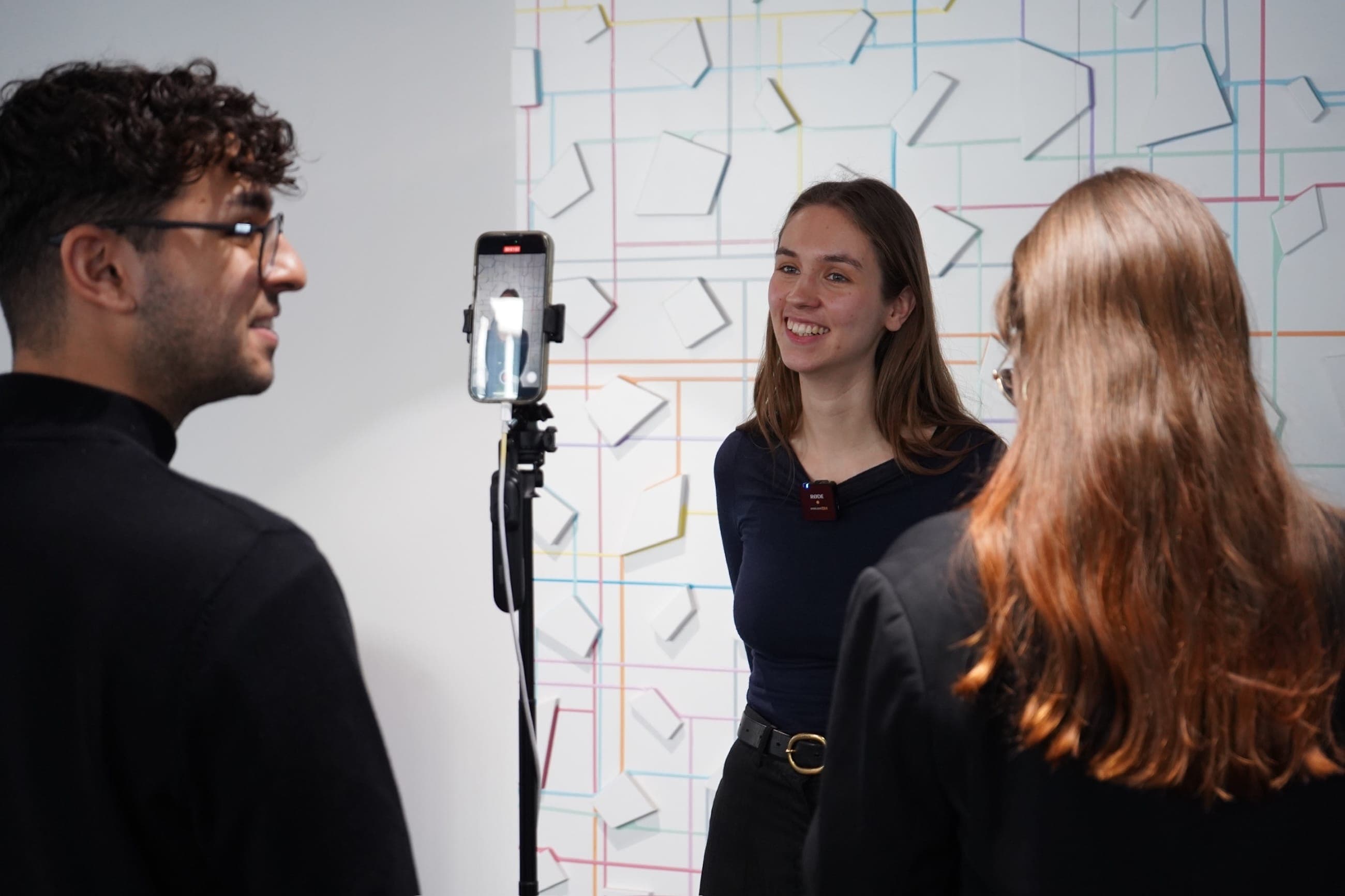
Each recording took only a minute or two. Short answers, a simple setup and a clear question order made the format workable for senior speakers moving between sessions. Beginning with a question they felt comfortable answering also helped them settle into the format before moving to less expected topics.
Keep the series recognisable
Recurring framing, graphics, edit rhythm and a final question about the Symposium connected interviews produced by different members of the team. The format remained consistent even as the speakers, subjects and filming conditions changed.
Outcome
The format worked well because it asked very little time from each speaker. The team was able to record a large number of interviews during a crowded programme, including with senior guests whose schedules allowed only a brief window after their sessions.
Audience response and speaker feedback were positive. The interviews also gave the Symposium a bank of short-form content that extended the event beyond the room.
The main weakness was the rollout. Many of the videos were published later, during the summer. They would likely have drawn more attention if they had been edited and released during the Symposium or in the days immediately afterwards.
The project showed how much preparation matters when the recording itself lasts only a few minutes. Strong questions, a simple setup and clearly divided roles made it possible to work quickly without making the speakers feel rushed.
Credits Photos: Felix Diemer. Produced as part of the LSE German Symposium communications team. I led the research, filming, direction, editing and captions for five interviews.