Orange the World
A participatory campaign installation that invited audiences to confront digital violence against women and girls and take a visible stand against it.
European Union Delegation to the United Nations in GenevaNovember 2025
Context and challenge
Each year, the European Union Delegation to the United Nations in Geneva takes part in Orange the World, the global campaign against violence against women and girls. In 2025, UN Women focused the campaign on digital violence.
Online abuse is often experienced through private messages, comments and other digital spaces. People outside those exchanges may never see the language involved or understand how persistent it can become.
For the Geneva event, we wanted to bring that hidden experience into a shared physical space and give participants a clear way to respond.
The subject required care. The installation needed to acknowledge the behaviour women and girls encounter online without using abuse simply to provoke a reaction or turning individual experiences into spectacle.
It also needed to work within the event itself. Guests had to understand the idea immediately, participate during the programme and later recognise the same visual story in the event photography, video and social media coverage.
My role
I developed the central activation concept and helped carry it from the initial idea through production, the event itself and the social media rollout, with support from the Delegation’s Head of Communications.
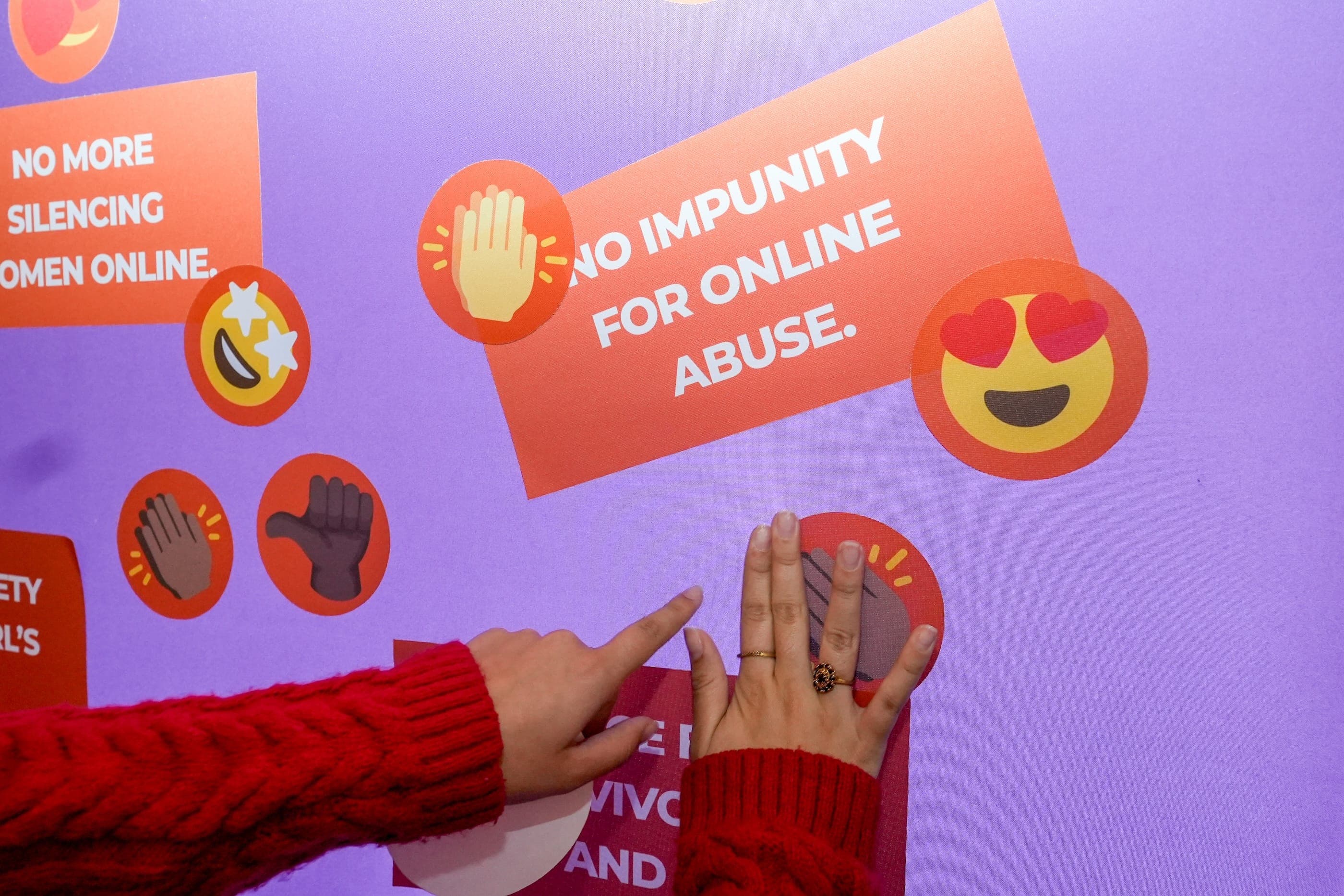
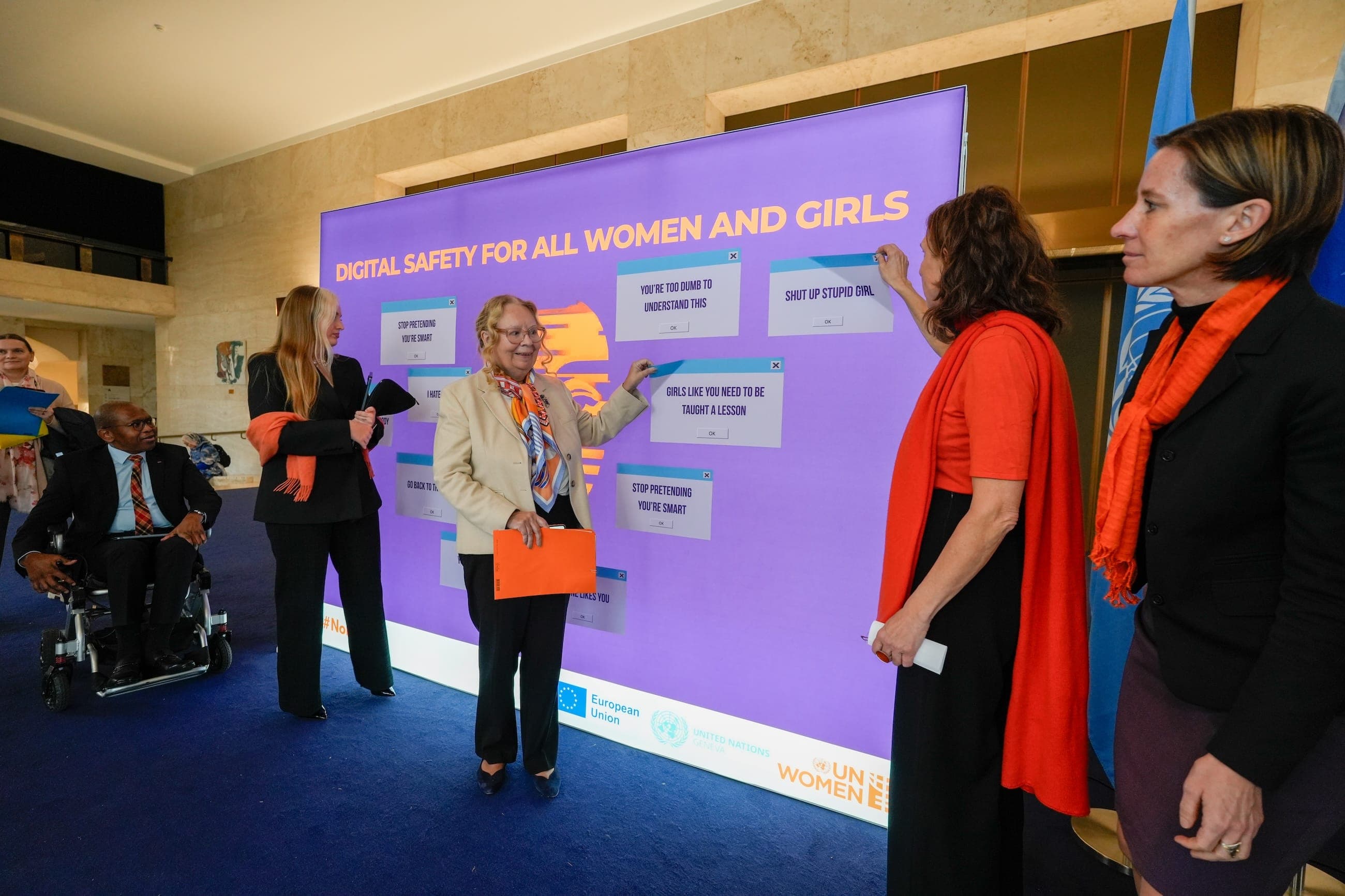
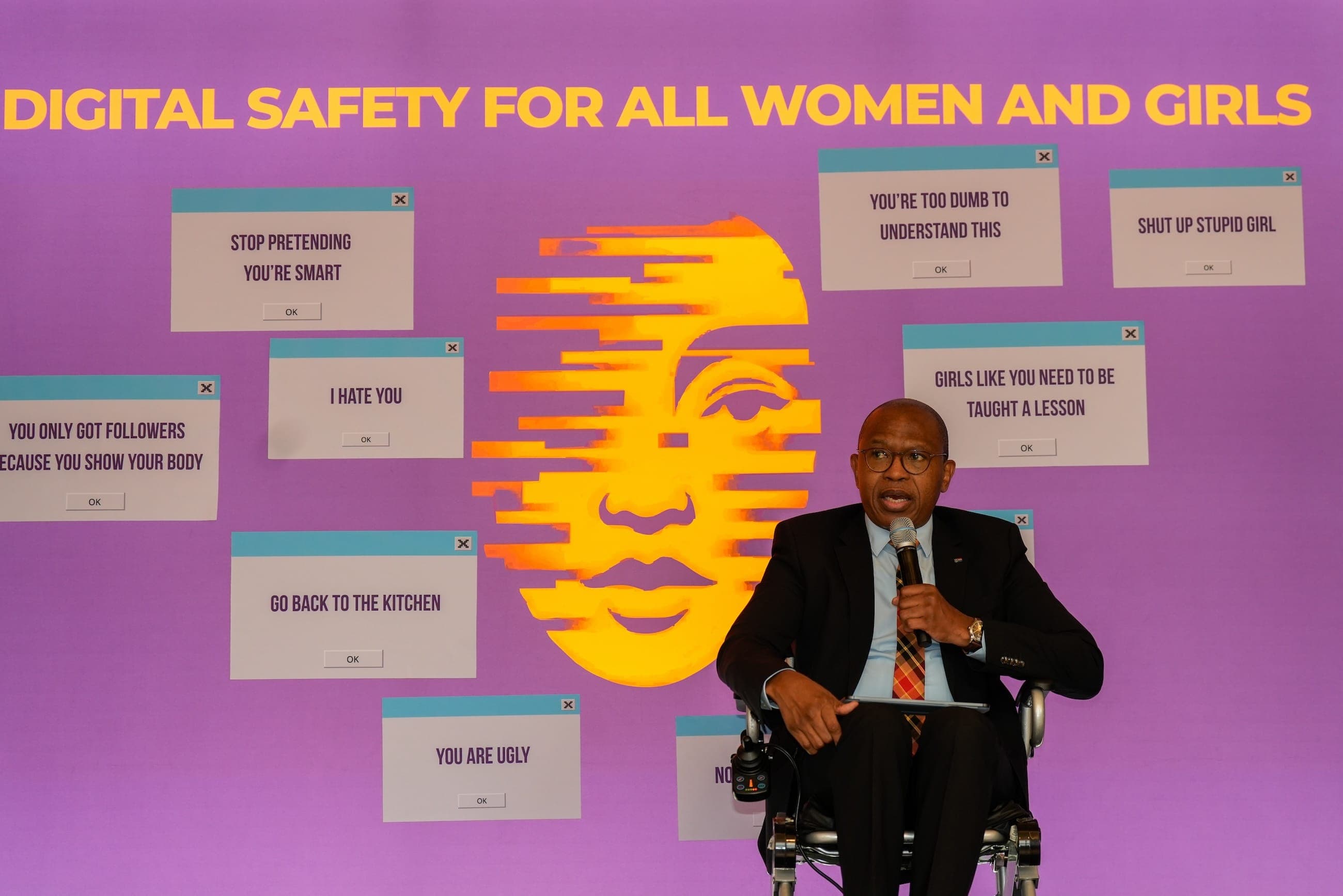
The installation took the form of a wall displaying examples of abusive online messages. During the programme, speakers removed those messages. Guests were then invited to add emojis and other symbols of support. The wall gradually changed from a display of abuse into a record of the audience’s response.
I developed the concept and campaign messaging, planned the visual execution, coordinated with the company producing the wall and collaborated with a youth activist working on digital violence against women and girls.
I also planned how the activation would unfold during the event and how its different stages would be photographed and filmed. Those stages later provided the structure for the event coverage across Instagram, X and LinkedIn.
The wider event used the established Orange the World visual identity. The installation and its accompanying communications were developed specifically for the Geneva event.
Key decisions
Give the issue a physical form
Digital violence often takes place through private messages, comment sections and online interactions that are easy for outsiders to overlook. The wall placed examples of this language in a space shared by the full audience. It gave speakers and guests a common reference point during the event and made the scale and repetition of the abuse easier to recognise.
Let participation change the installation
The wall was designed to change during the programme. Speakers first removed the abusive messages. Guests then added emojis and other symbols of support. By the end of the event, the wall looked different because of the actions participants had taken. This made participation part of the installation itself. The audience was not responding to a completed display. Its response produced the final visual.
Give the campaign colour a function
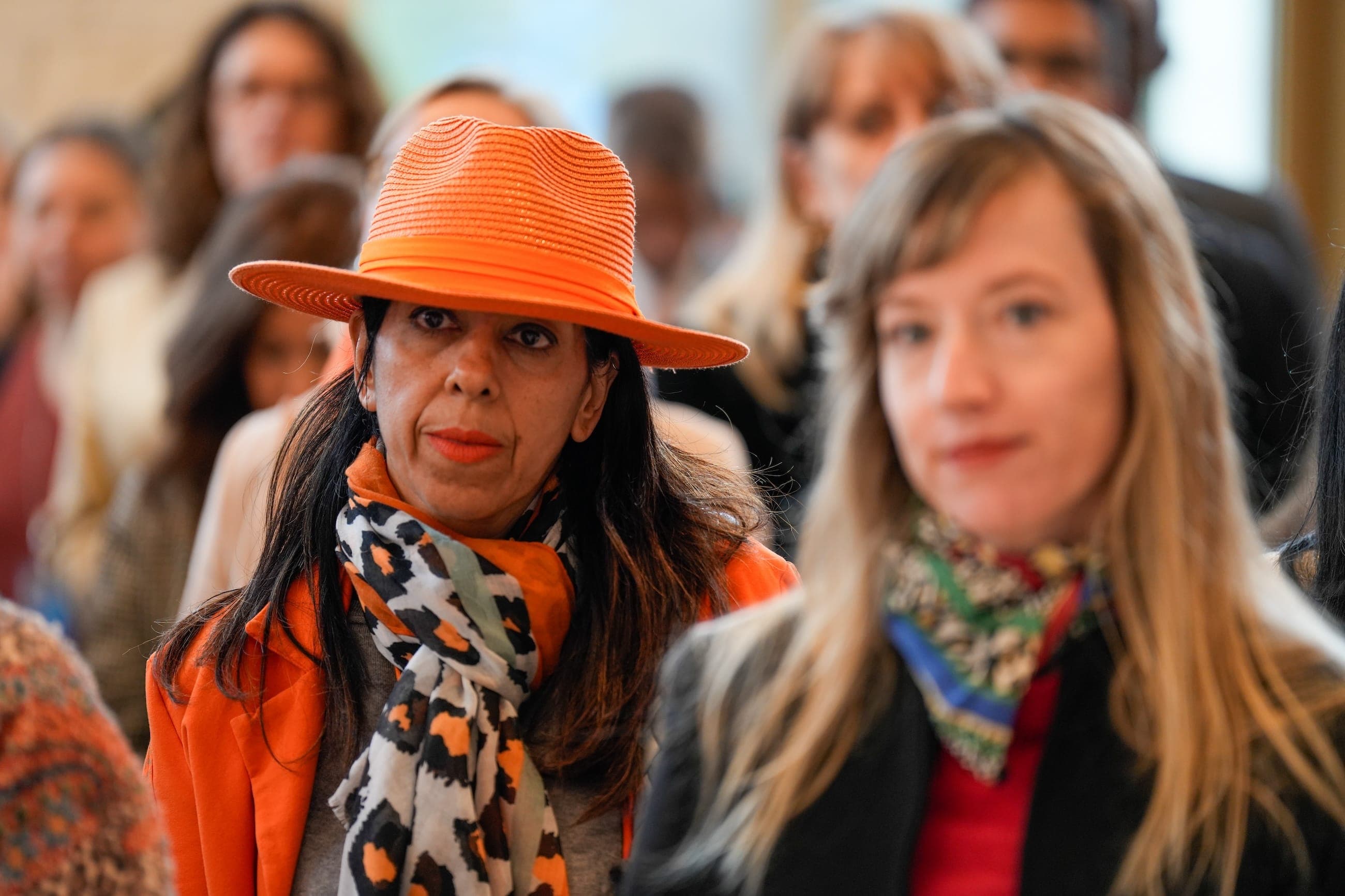
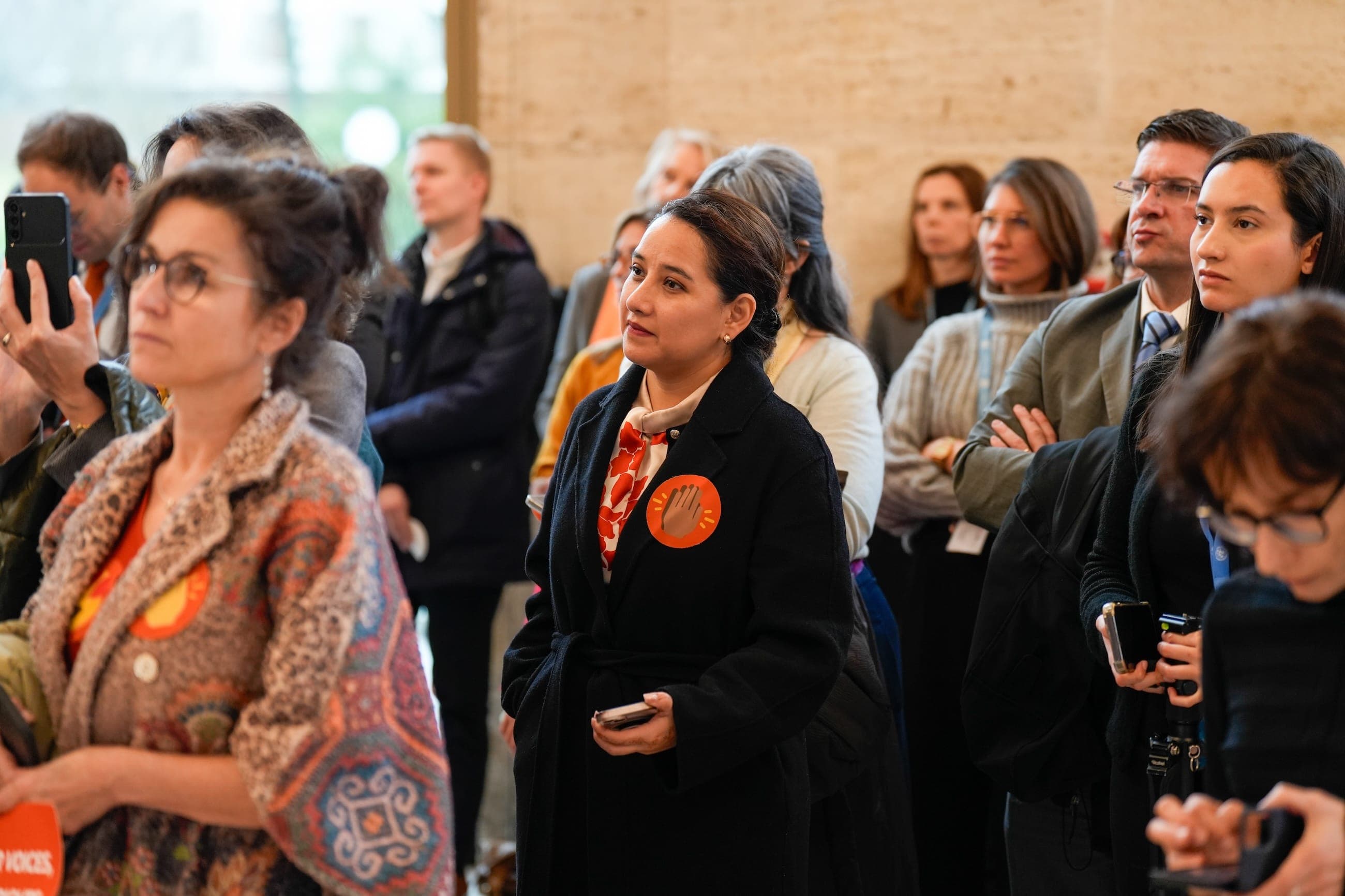
Orange already identified the wider campaign. Within the activation, it also became part of what participants did. The colour appeared across the installation and in the symbols added by guests. As the wall changed, orange helped make the audience’s response visible in the room and in the resulting photographs.
End with agency
The installation addressed the abuse directly, but the audience also needed a meaningful role within the event. Removing the messages and adding symbols of support gave speakers and guests a concrete action. The final wall expressed collective opposition to the abuse while avoiding any suggestion that symbolic participation alone could resolve the harm involved.
Outcome
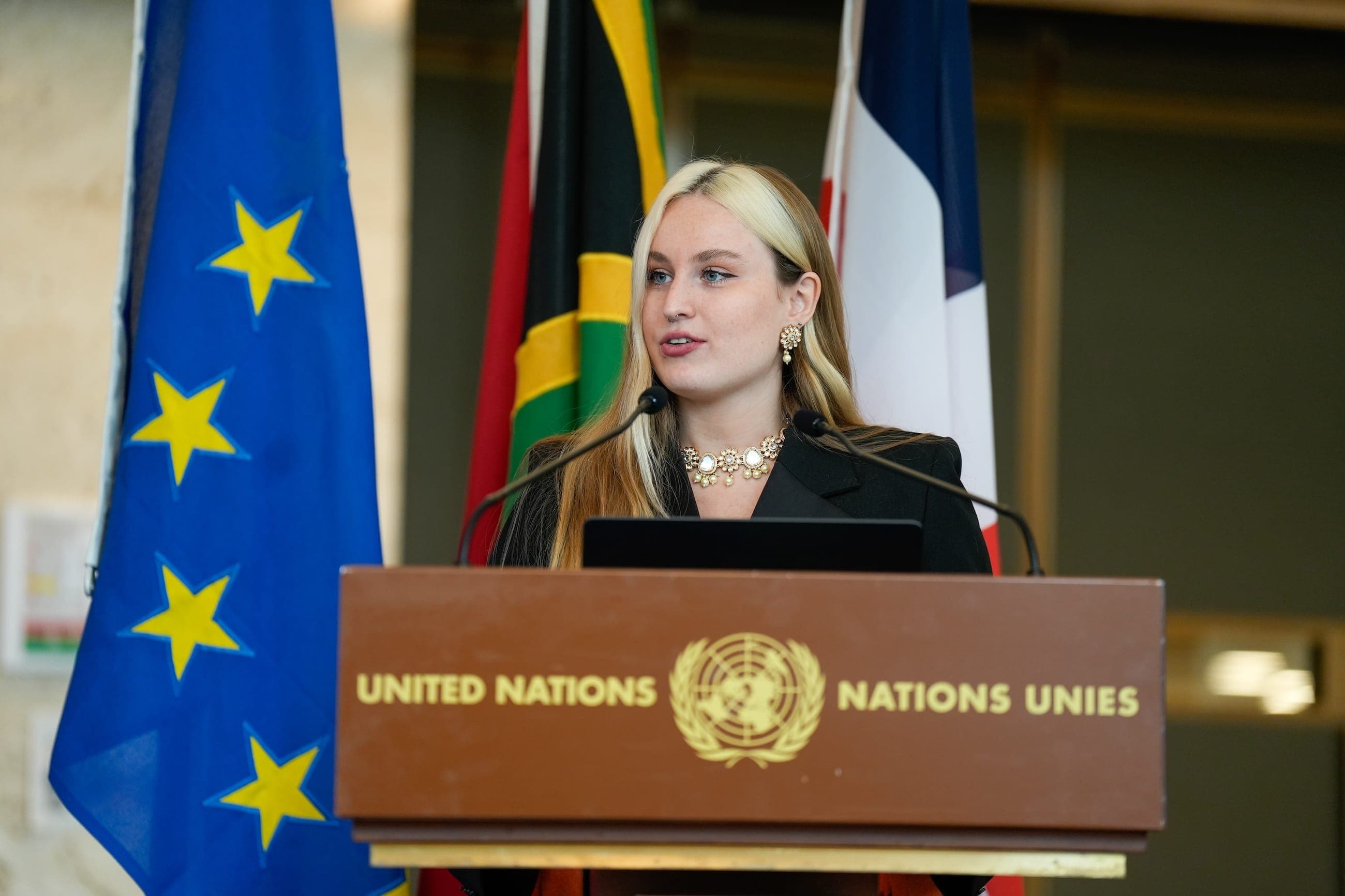
The wall became the main visual and participatory element of an event attended by more than 300 ambassadors, United Nations officials, journalists and civil society representatives. It gave speakers and guests a defined role within the programme. It also created a visual sequence that could be followed as the event progressed, from the initial display of abusive messages to their removal and the addition of symbols of support. That sequence shaped the event’s photography, video and post-event social media coverage. The content documented the actions through which the wall changed instead of repeatedly showing a static campaign backdrop.
The activation was amplified through institutional and partner channels. More specific claims about the response should only be added when direct feedback, reposting data or partner analytics can be verified. With more production time, I would have built a fuller digital campaign around the activation. Short explainers, statistics and contextual content before and after the event could have provided audiences with a deeper understanding of digital violence alongside the participatory moment.
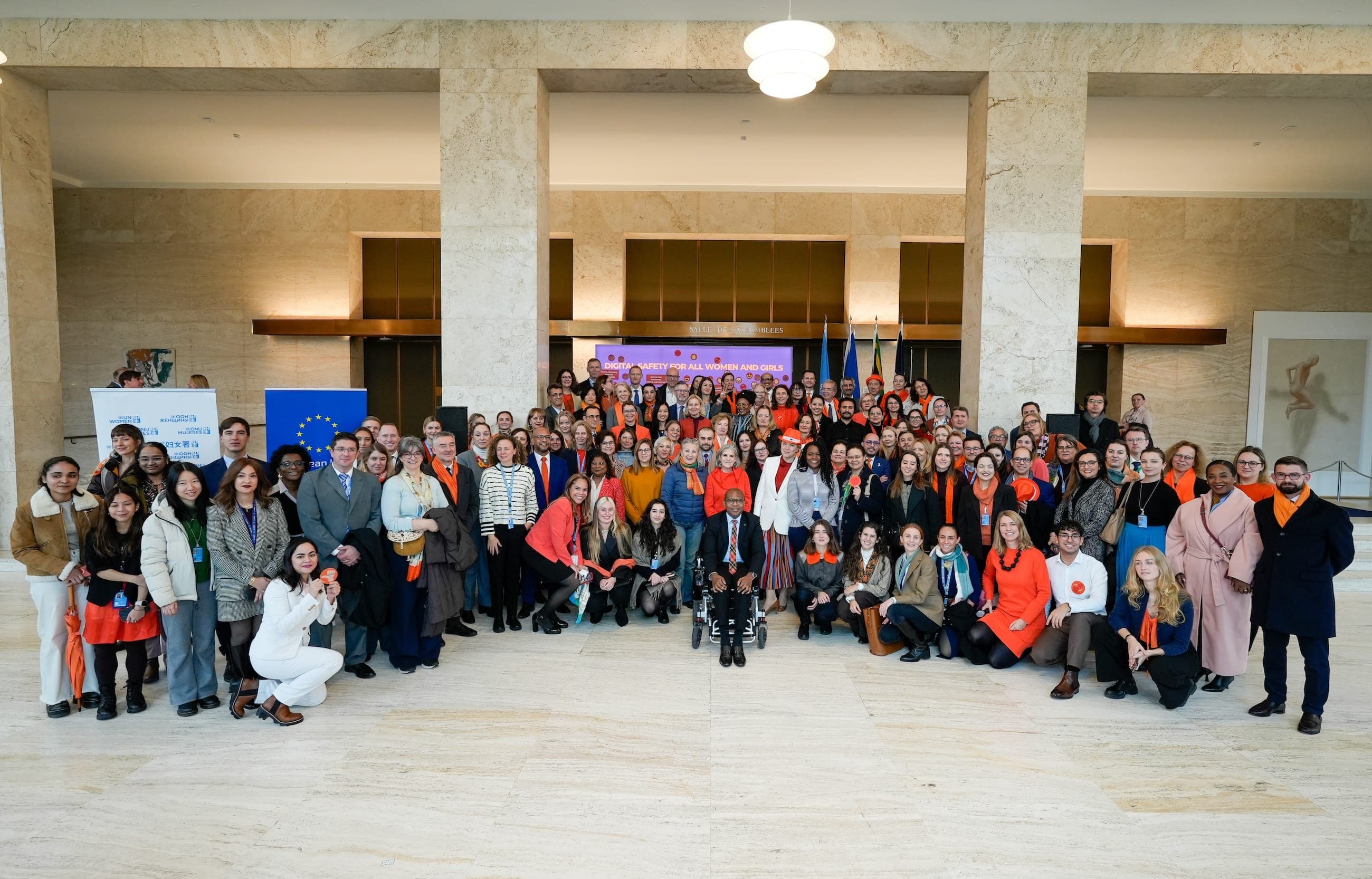
Credits Developed within the communications team at the European Union Delegation to the United Nations in Geneva, in partnership with UN Women Geneva and UN Geneva. I developed the central activation concept and contributed to the campaign messaging, visual planning, production coordination, event execution and social media rollout. The activation also included contributions from the invited youth speaker, participating ambassadors, event partners and the company responsible for producing the installation. Photos: UN Photo Geneva